
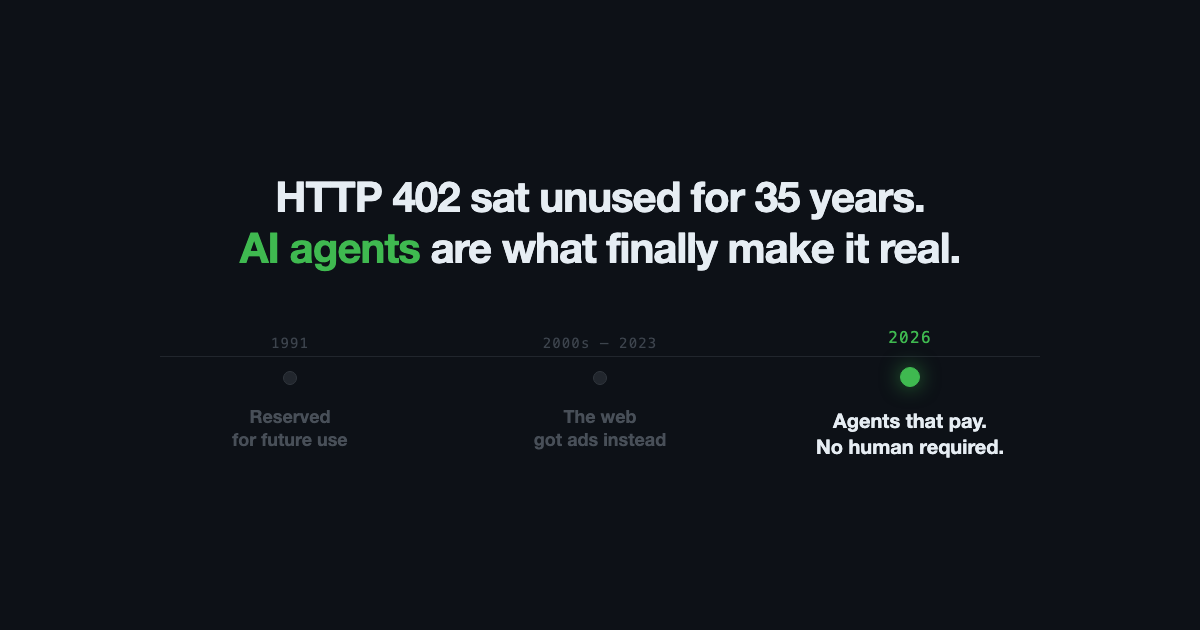
In 1991, HTTP 1.0 shipped with a status code called 402 — “Payment Required.” It was reserved for future use. A placeholder for a web that could charge for things natively.
It never got used. The web got ads instead.
Thirty-five years later, x402 is finally building what 402 was supposed to be. A standard where any client can hit an endpoint, receive a payment challenge, settle it, and get what it asked for. No checkout flow. No redirect. Just HTTP.
What makes it interesting now is who the clients are. It wasn’t designed with AI agents in mind, but it fits them perfectly. An agent can read a 402 response, sign a payment authorization, and complete the transaction without a human in the loop. The primitive that was waiting for a use case finally has one.
I set up an AI agent this week to mint a generative art token on Base via x402 — $1 USDC, no wallet UI, no human approval. The whole thing was about 15 lines of Python. Not a product. Just a glimpse of what becomes normal once this infrastructure spreads.
The original web vision had payments as a first-class primitive. Agents might be the thing that finally makes that true.